Snakeheads are a furious, frustrating, and fantastic fish to target. And although this species is still relatively new to Chesapeake country, at this point many of us have been targeting them for years. With time and experience comes insight, and one thing that’s become apparent to dedicated sharpies is that although April can be a difficult time to get these fish to bite, it’s also when they gather in large numbers in fairly tight areas.
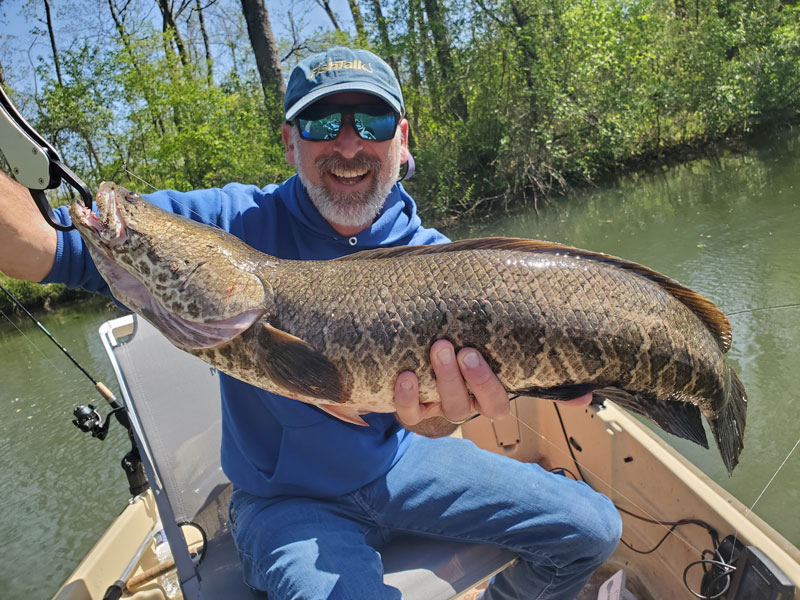
The reason for this phenomenon, which has come to be known as the “spring push,” remains unproven. These fish certainly aren’t spawning as of yet and weed growth remains sparse. It’s impossible to dismiss the fact that the spring push coincides with the spawning runs of fish like white perch, river herring, and shad, but it’s also impossible to justify this with the snakehead’s seeming unwillingness to eat at times. Yes, there are days with epic bites, but more often fish have to be tempted or triggered to get them on the line and they certainly don’t seem to be gorging themselves. On the flip side of the equation, might it be hard to get them to bite because natural prey is so plentiful? Theories abound; facts are in short supply. Whatever the reasons, however, the spring push provides us with an excellent opportunity to find good numbers of fish—and hopefully whack ‘em.
Sighting the Snakeheads
It won’t be too shocking to hear that the push takes place in those same rivers, creeks, and tributaries that those aforementioned species spawn in. I can only personally vouch for its occurrence on the west side Middle Bay Bay tribs because that’s where I’ve seen it with my own eyes, but reputable anglers tell me it happens throughout Chesapeake country.
To find the pushing fish you’ll want to head for an area where the water is fresh or almost completely fresh but still just barely subject to tidal swings. Having deep water (and in this case “deep” means just three or four feet) close by is good but not necessary. Same goes for deadfall along the shoreline. Water clarity is also pertinent, not necessarily because the fish prefer it so much as because it’s easier to spot them.
Yes, spot them—the best spring push action comes when you can sight fish (more on that later). This makes bright, sunny, calm days the best conditions for this fishery. Since the water’s still quite cold at this point in the year the fish tend to be up near the surface when the sun’s shining brightly, especially in the mid-afternoon, soaking in the warmth. This makes prospecting for hotspots a game of keeping on the move and looking for the fish, rather than blindly casting at shoreline targets as you go.
Most of the time you’ll ease along staring at a shoreline to no avail for quite a while, but when you find that magic zone and spot a snakehead, solid numbers are likely close by. The fish will still be scattered, certainly not schooled, but in the same vicinity. So it’s usually best to stay mobile and move along at jogging speed until the first fish is sighted, then slow to a crawl and check out every inch of water nearby. Most often you’ll spot a shadow or a dark spot sitting under or next to a tree limb or rock, and sometimes you’ll see them right up against the bank where a recess or depression provides a hiding spot.
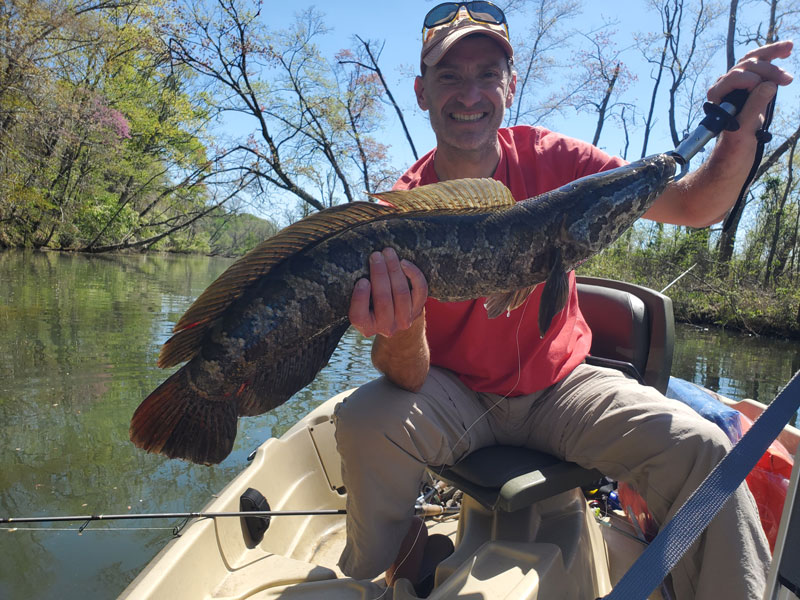
I can’t say if it’s due to the specific spots I fish or if it’s common across the board, but in my experience the concentration of fish will run through an area around 100 to 200 yards long before dwindling out or hitting an area that’s inaccessible due to depth, logjams, or other impediments. Note that I generally go for the snakes in a small boat, so kayakers may have an access advantage, here.
Catching the Snakeheads
For whatever reason, when spotting these snakes it can be very, very tough to get a bite. They don’t seem to want to chase anything more than a few inches, and a live minnow wiggling a foot or two away is often ignored. Cast a spinnerbait or jerkbait right on top of the fish’s head and it’ll spook, darting off to never be seen again. Cast a topwater lure beyond the fish and pull it back with ideal positioning and the snakehead will pretend it doesn’t exist. So… how do you get these fish biting?\
While I’m certain there are other tactics that will prove successful, one that gives you a 50-50 shot at just about every fish you spot is a four- or five-inch fluke rigged weightless. Sometimes you can cast this beyond the fish, bring it just a few inches from its face, and a slow twitch-sink-twitch will buy a bite. If the snakehead ignores the lure after three or four well-placed attempts, drop the fluke right on top of its head. Yes, this is likely to spook the fish—which is exactly what you want. It triggers a fight-or-flight response and the snakehead will do one of two things: half the time it will zoom off and disappear, and half the time it will attack with a vengeance. Those might not be the best odds in the world, but when it comes to fishing they aren’t all that bad, either.
Snakehead fishing during April can be just as frustrating as fishing for them at any time of the year. This phenomenon won’t last for more than a few weeks, and heavy rain or a sudden cold snap can bring it screeching to a halt. But if sight fishing for snakes sounds like fun and you want multiple shots at fish packed close together, it’s time to start planning a trip around the spring push.